
Living Landscapes of Castletown

This project has sought to document and reflect upon the 'living landscapes' of Castletown through the eyes of some of the people who live here. It sprung from a collaboration between Castletown Heritage Society and a PhD student named Julian Grant, whose research at the University of the Highlands and Islands focuses on the relationship between tourists and local communities around the North Coast 500.
Using disposable film cameras, the five participants in this project have created a set of images (and accompanying words) that show Castletown as a vibrant place where the land itself is etched with stories, relationships, uses and meanings. This reminds us all - visitors and locals alike - that this is not a remote wilderness but a peopled place. And, as you'll see in the subtle hints of pandemic and lockdown, these images are a record of the community at this moment in time: a 'heritage of now' for future generations to look back on.
INDEX - Click on the following links to navigate the project - or just scroll down the page
- Project background - Julian Grant
- Participant 1 - Jayne Blackburn
- Participant 2 - Neil Buchan
- Participant 3 - Muriel Murray
- Participant 4 - Sharon Pottinger
- Participant 5 - Christine Stone
Project background - Julian Grant
One of the participants in this project, Christine Stone, wrote: I see myself as a dweller whose links with the landscape both present and past remain strong and vibrant. The various layers of my living landscape are known to me, understood by me and important in my daily life. These words beautifully describe the relationship between people and place that is the focus of both this project and my PhD research. For a bit over a year now, Ive been working with the Castletown Heritage Society to learn about the different ways that local people and tourists think about and interact with the landscapes around them. Visitors come to this part of the world for many different reasons, and its beautiful landscapes are one of them. This area is home to stunning beaches and cliffs, wide open skies, green fields and stone walls and scenic villages. And yet for those who dwell here (as Christine says), this is also a working landscape, a living landscape. Local peoples knowledge, experiences, everyday routines and relationships all shape the way they see the landscapes around them and the meanings they give to them. By giving us a glimpse into their lives, the participants behind the images and words shown here have created a wonderful community-generated record of Castletown and Caithness from within.

In Caithness and all across the northern Highlands, tourism is a vital part of the local economy and a feature of everyday life especially in the summer months when roads, B&Bs, campsites and beauty spots hum with activity. The creation of the North Coast 500 touring route in 2015 has dramatically increased traffic to the area, bringing much-needed economic activity but also raising worries over the scale and type of tourism and its effects on local communities. These concerns intersect with other deep-rooted issues: how the Highlands are represented in culture and media, how land and resources are used, and how to build a sustainable future for rural communities affected by social, cultural, economic and ecological changes. As a researcher, Im interested in learning from the lived experiences of people in touristed areas and envisioning new spaces for productive social action. Given the opportunity, what would local people choose to share about their communities with tourists? Can community-generated images and stories help encourage a more inquisitive, informed and mutually beneficial form of tourism? And what is the role of academics such as myself in shaping the relationship between communities and tourism?
This kind of socially-engaged research is right at home at the University of the Highlands and Islands, where I began my PhD (entitled People, Place and the North Coast 500) in January 2019. I moved to Thurso to start my fieldwork and set out with the aim of working with several heritage organizations around the route of the North Coast 500 to develop community-based research projects such as this one. And this is what brought me here to Castletown and to the wonderful set of volunteers and participants who have helped bring Living Landscapes to fruition. In March 2020, I held a public event at the Castlehill Heritage Centre to share some of the early findings of my research and to invite people to join in the project. Only a couple weeks later on the eve of getting underway we were plunged into the disorientating and stifling new reality of the Covid-19 pandemic and lockdown. The Living Landscapes project was put on hold until it was safe (and legal) to proceed. By late summer, restrictions had eased enough to allow us to move forward in a smaller, semi-virtual fashion.
The five people whose photos you see here each live within a couple miles of the centre of Castletown. Coming from a wide range of places and backgrounds, all of them are deeply rooted here in the local community as neighbours, parents and grandparents, schoolteachers, heritage volunteers and (most recently) Covid-19 relief coordinators. Perhaps it is this spirit of community service and love of place that motivated them to sign up for this project. Each participant received a 37-shot disposable film camera, which they used to chronicle their own relationship with the landscapes around them as they went about their daily routines over the course of the month of October. Once the shots were developed and printed, in a series of one-to-one and group sessions (whether over Zoom or in a quiet café) we shared the photos with each other and discussed and debated the stories and meanings behind them. Finally, for the exhibition you see here, the participants wrote thoughtful descriptive captions for their selection of photos that they wished to share with the public. I am grateful for these perceptive and beautiful contributions to my research and for the friendship that these five participants have given me over the past year.
These images and words are full of memories, of people, of bits of poetry, of personal forms of knowledge rooted in the joys and challenges of life in a rural community. They helped me see Castletown from a different angle. Whether youre from nearby or from far away, I hope that this exhibition gives you food for thought. What do these pictures tell you about life in Caithness today? How do they compare with your expectations and assumptions about this place and the people who live here?

Julian Grant, University of the Highlands and Islands
PhD title: People, Place and the North Coast 500
This PhD studentship is supported by the European Social Fund.
Participant 1 - Jayne Blackburn
I was born in Egypt in 1950 and have moved home every few years virtually all my life, first with the RAF for my father and then following job opportunities for my husband. We originally came to Caithness from Canada in the 1980s but left when my husband had a job offer in England. After 17 years we moved back to Caithness with his job and have been here now for 15 years.

We chose to come back because we love the slower pace of life and the open spaces. We moved to Castletown and settled in. I taught for several years and joined Castlehill Heritage Centre, first turning up on Wednesday afternoons and gradually joining in more and more, enjoying the friendliness of the volunteers. I particularly enjoy finding out about the rich history of Castletown and its surroundings. Meeting a variety of visitors to the Centre and listening to their stories is fascinating.
We were members of a walking group in Manchester and joined one here in Caithness. The walks take us all over the county enabling us to appreciate the variety of landscapes and the open skies. I love walking to Castlehill and the village from our house because it is a quiet time when I can take in the open space and enjoy the wildlife that I might encounter. I joined the "Living Landscape Project" because I thought it would make me look closer at my surroundings and help me appreciate and be more aware of it. In this it has succeeded.

FARMYARD - THURDISTOFT
This farmyard looks empty and deserted and as if nothing is happening, which is deceiving as farm work goes on all year. It shows the empty bays and the dryer ready to be cleaned. This is following the hustle and bustle of the harvest, when combine harvesters, tractors and trailers and farm workers are all busy bringing in the grain.

CAITHNESS LANDSCAPE
The sheep in this field are gazing at the photographer whilst behind them you can see the broad Caithness plain and the wide open skies which is part of the allure of the area. The area around is a working one, with the farm fields having different purposes either grazing or crops such as barley and oats.

CONVERTED FARM COTTAGES
Here the two cottages were originally for farm workers and were very basic but have been renovated and modernised and now are now rented out to holiday makers and contractors, showing diversification. These are linked closely to the farm but have evolved into a second purpose. They are in regular use during the summer season and beyond, showing that the area is still very much linked to the farm work and the visitors to the area.

RAF CASTLETOWN
These buildings are part of the historical legacy of the area. They are the remains of RAF Castletown from WW2, (the firing range, and the decontamination building). These buildings are part of the area that families, of those stationed here in the war, visit as a pilgrimage to help remember their loved ones. The fields around the buildings are grazing for cattle and sheep who use the walls of the firing range as shelter for their young.

THE OLD MILL
This shows the dilapidated remains of the meal mill on the outskirts of Castletown which provided employment to locals. This once substantial mill creates interest from visitors as they wish to know what is was and why has it not been renovated. It is part of the history and reflects how employment has changed over the years.

SEASCAPE UNDER A BLUE SKY
A seascape showing Dunnet Bay and beach, Dunnet Head and the outer walls of Castlehill Harbour, the colour of the sea reflecting the blue sky. This view and the wide expanse of beach are part of the lure for visitors to the area. Again the link to the area's heritage is depicted by the flagstone walls of the harbour.

THE HARBOUR AT HIGH TIDE
This shows Castlehill Harbour at high tide with a variety of boats, both for leisure and for creel fishing. The sky is grey and overcast but the water in the harbour is still. The harbour walls are the indication of the history of the flagstone industry when the harbour was a hive of activity.

A KAYAKER AT THE HARBOUR
This is the same harbour but on a bright sunny day and it shows the same boats moored to the harbour side but also a visitor setting off in a kayak. The harbour is used by the fishermen and visitors but in the heyday of the flagstone industry it was a busy place exporting the flagstone around the world. Large boats were loaded with the flagstone to take to other ports.

CAMPERVANS IN THE CAR PARK
Here can be seen motor homes and campers in the Castlehill car park. The car park was originally part of the pavement quarry that has been filled in and covered. This car park is a popular stop over for motor homes and tents due to a lack of facilities for tourists and has good views over the old flagstone works and the bay.

AN AVENUE OF TREES
This avenue of trees is taken from the Dunnet Road and the small lodge at the end of the drive. It used to lead to Castlehill House which was owned by James Traill, who opened up and developed the flagstone industry at Castlehill. The house is no longer there having burnt down. This planting has a planning application in progress, for the development into a campsite for visitors, thus showing that the area is continually evolving.
BACK TO INDEX
Participant 2 - Neil Buchan
Whilst not a native of Caithness I have lived here since the age of four when we moved north as a family from Aberdeen. Since those earliest days I have always considered Caithness to be my home, so having married a local lass it was no surprise that we should chose to settle here. We moved from Thurso to Castletown almost thirty-five years ago and have always found it a safe and welcoming community in which to raise a family. We are now happily retired here.

In my youth and early career I had little interest in history or heritage being more excited by engineering and technology, but gradually came to realise the importance of the past and the environment around us in shaping our future. Through a neighbour I became interested in the activities of Castletown Heritage Society, who take a practical, engaging approach to bringing the history and heritage of the Castletown community to life. Having drawn me in I have served as a trustee of the Society for over eighteen years, the last two as Chairman, and enjoy using my professional engineering and management skills in support of the Society, particularly during the creation, development and ongoing operation of Castlehill Heritage Centre.
The Living Landscapes project has been an exciting opportunity to capture a sense of the local community as we experience it today. My approach has been to try to consider how elements of our natural and built environment interact not just with the past and present, but their potential significance to future observers of these times - tomorrow's history today, perhaps.

SUNFLOWERS IN CASTLETOWN
My wife and I have lived in our house in Castletown for nearly thirty-five years. Both of us enjoy working in our garden which is surrounded by mature trees affording good shelter from the worst of the Caithness weather. Most of the garden is laid to lawns, shrubs and flower beds, however we successfully grow fruit, including blackcurrants, tayberries, loganberries, brambles, apples and rhubarb, plus a regular healthy crop of garden peas. This year Liz nurtured two different varieties of sunflowers - the classic tall ones and also a shrub variety which produced large numbers of dense golden heads, similar to ball dahlias. Whilst Caithness can on occasion live up to its reputation of horizontal rain and gale force winds for the most part the weather is much less dramatic, and with a bit of shelter and care Castletown gardens can be very productive, with many providing impressive displays of colour.

CASTLETOWN PLAYPARK
The children's play park in Main Street, Castletown was completely refurbished between 2014 and 2016 thanks to the amazing work done by the Castletown Community Project. This community led group organised many local events to raise the funds necessary to install modern, high quality play equipment on new safety play surfaces. The end result is one of the best play facilities in Caithness, much used by the local community and beyond. This is an excellent example of what can be achieved when the community works together to a common aim, creating a lasting legacy for the village.

THE NEXT STEP
Since the 1950s Caithness has been at the forefront of several innovative developments in the production of electrical power. From Dounreay to the west of Thurso which was chosen as the UK's primary site for the development of Fast Breeder nuclear reactors to the short lived venture by the North of Scotland Hydro Electric Board in conjunction with the Peat Marketing Board to build an experimental peat powered power station at Braehour Farm, Scotscalder. Caithness is currently subject to the extensive development of wind turbine installations; the scale of some are pushing boundaries and having a significant impact on the landscape of Caithness. The photograph shows the latest energy development within the county by MeyGen. Experimental tidal power turbines have been installed on the seabed in the Pentland Firth which has one of the highest tidal races in UK territorial waters. If the technology proves to be successful there is potential for substantial power production with much reduced environmental and amenity impact.

THE SILENT EVOLUTION OF BALES
I well remember as a young lad some 50+ years ago getting chased by the farmer for playing on his haystacks at Ormlie Farm at the edge of Thurso. At that time cut hay was allowed to dry then gathered in 'coles' (bunches) before being built into stacks for storage and subsequent use as feed for the animals over the winter months. Shortly after it became more common for hay and straw to be bound into square bales using a mechanical 'baler' towed behind a tractor. The bales were easily handled by hand and ideally shaped for stacking for storage over the winter. In my 20s and 30s I spent many a summer helping out at hay time at my wife's family farm at Larel. I was certainly a lot fitter in those days! Nowadays most farmers make large round bales as shown in the photograph, taken at a field at Murkle just west of Castletown. The overall handling is reduced, but manual handling is out of the question. The latest innovation is large square bales, again requiring mechanical handling, but offering greater packing density in storage. The photograph is therefore a moment in time in the evolution of hay and straw handling - who knows what will be the common practice in twenty years time?

A CASTLETOWN INSTITUTION
Castletown Chip Shop was in operation by the time we came to stay in Castletown in 1986 and had established a well deserved reputation for the best chips in the county. People were known to travel from as far afield as Thurso and Wick for a good chip supper. The owners were very friendly and were always very kind to our son when he was a babe in arms almost 30 years ago. Over time the chip shop has passed through several owners and is currently run by the family who own Castletown Meat Company, another highly successful enterprise. Sadly the shop was put up for sale in July 2020 and at the time of writing a sale has yet to be concluded. Hopefully new owners with a passion for good chips will emerge, but just in case I felt it appropriate to capture what is a undoubtedly Castletown institution in a photograph.

BLACK AND WHITE - A SIGN OF THE TIMES
Olrig Parish Church in Main Street, Castletown currently operates in a union with three other churches - Dunnet, Canisbay and Keiss. Each month, one of the parishioners collates and publishes a 'Prayer Diary', offering thoughts of fellowship and worship for each day of the coming month. The Prayer Diary used to be printed and distributed to all the parishioners in the union, however with the advent of the Covid pandemic this proved to be difficult. Not to be defeated the Prayer Diary is now emailed out to everyone with a pre-registered email address, and also to volunteers in each parish who print off the Diary and distribute by hand to those who are unable to access the Diary online. The photo reflects the impact of Covid whereby the November 2019 edition was printed in full colour, but the subsequent August, October and November 2020 editions are in black and white, having been printed off on our home laser printer.

SUSTAINABLE HEATING
The heating system at Castlehill Heritage Centre is based on a high efficiency log burner coupled with a large thermal store that feeds underfloor heating within the building. The logs are sourced from sustainable woodland at Dunnet Forest just three miles away. The boiler is fired once or twice a day during the winter months (less often during the summer period) by our volunteer 'boiler crew' and we are grateful for their efforts and support. Unfortunately the Centre is currently closed to visitors due to Covid so we just fire the system twice a week to keep the building and contents dry and in good condition. The photo was taken after I had given the boiler its monthly clean and service.

A FLY CUP AND FANCY PIECE
Prior to Covid my wife and I enjoyed regular weekends away in our mobile caravan plus days out and about locally. We have tried hard during the Covid pandemic to continue this philosophy within the constraints of the restrictions. Picnic lunches are the order of the day, whereby a simple shopping trip is turned into an opportunity for a 'trip out'. For the latter half of 2020 we were fortunate in Caithness to be within 'Zone 1', which meant that travel within the zone was not restricted, therefore we took every opportunity to have a picnic lunch or afternoon cuppa outside somewhere. The photo was taken in a layby overlooking the Burn of Acharole, just south of the village of Watten. Our philosophy is that you don't have to travel far to enjoy a wee trip out and about.

A SIXPENNY ONE PLEASE....
Whilst it is the 'holy grail' for travellers on the North Coast 500, local folk also enjoy a day out to John o'Groats. We often drop into Stacks Bistro for an afternoon binge on their superb range of home bakes, or an ice cream at Flavours. The photo reflects, once again, the impact of Covid, whereby only one patron is permitted into the shop at a time and 2m social distancing applies in the queue outside. The Caithness Fudge ice cream is to die for

VIRTUAL - THE NEW NORMAL?
The Covid-19 pandemic has impacted almost all aspects of normal life, not least operation of Castlehill Heritage Centre. After due consideration we decided to close the Centre to visitors until circumstances permit an acceptably safe operating scenario. In the interim, Castletown Heritage Society is trying to continue operations by maximising use of the digital environment. Our 2020 AGM was held online using Zoom, and committee meetings have also been held using this format. One plus point to emerge from the pandemic is an increased willingness of heritage organisations to work together 'online' for mutual benefit. One such opportunity is the Highland Threads Project, whereby Museums and Heritage Centres within the Highland Region showcase costumes of local historical significance in an 'on-line museum'. The image shows me sitting in our conservatory discussing the project with committee members using the medium of Zoom. On-line networking and socialising has expanded exponentially during the Covid restrictions - will this be the new norm??
Participant 3 - Muriel Murray
Perhaps it is because I was brought up a townie in Edinburgh, Dundee and Aberdeen that I am so passionate about my adopted home land here in Caithness. I arrived as a newly qualified teacher in 1967 and initially was captivated by the endless skies, the wide open spaces, the coasts and cliffs and the people. I married into a long established farming family and became a confirmed country dweller. Later my interest in local history led me to Castletown Heritage Society where I helped set up a community heritage centre. Through this involvement I participated in every tourism initiative from the 1980s onwards, endeavouring to promote Caithness as a popular visitor destination.

My particular joy is to talk to visitors to the heritage centre. In conversation with them, whether from this country or others there is always much to learn as well as much to tell.

LOBSTER FISHERMAN'S HOME
Tucked away behind the main street lives Kevin McPhee the lobster fisherman. In the winter his large lobster boat is moved here from the harbour by crane. I love to see the creels piled up in his garden next to a refrigerated cabin, which hums away, keeping the lobsters cool until collected. It fell silent during the lockdown in the early days of the pandemic. Most of the catch is exported to the restaurants of Spain and France.

SIGN OF THE TIMES
Spotted on a local washing line. Not colourful bikini tops but anti viral face masks.

FAMILY PHOTO PART 1
Although my family is separated by a few hundred miles we do try to get together every six weeks or so, Covid restrictions permitting. It is particularly satisfying when everyone can engage in a joint activity. Here we are all fishing completely unsuccessfully in the rain at Castlehill Harbour.

FAMILY PHOTO PART 2
And here's the male half of the family.

GATE
On my walks I like to look at the different types of field gates. Prior to the modern standardised tubular metal variety, gates used to be made by the local blacksmith and had character. This is an example of an "arts and crafts " design apparently unique to the Olrig estate. Sue Pargeter, local artist and design enthusiast has located and sketched half a dozen of them. All similar but each one unique in its detail. She hopes to arrange an exhibition of her gate works for Castlehill Centre, complemented by artefacts and photos from our collections.

HOTEL
My view of parts of the village reflect my interest in its heritage. Tar-laying behind the newly extended hotel reminds me that the building used to be the general store and post office where my husband's grandfather was post master. He was also agent for farm machinery and other farming products. The building also housed William Keith's tailor and outfitter business. On one occasion the entire staff of the Castle of Mey were kitted out with suitable mourning clothes for the funeral of the earl of Caithness's daughter.

WHERE THERE'S MUCK THERE'S BRASS
The site of the scrapyard was originally the depot of Morrison's buses. Castletown's big employer Norfrost, which produced freezers for the world market was expanding rapidly in the 1990s and the original bus depot was in the way! A new site was acquired and the move made. In time both Norfrost and Morrisons went out of business. Now a local farmer uses some of the Norfrost buildings to house his sheep and fodder.

LOCAL GARAGE
Now taking on the mantle of agents for farm supplies and machinery, the new management is sprucing up the premises. What a boon it will be when the fuel pumps are reinstated for locals and tourists.

HAYFIELD FARM
Our own bales gathered in safely. There are two sights which gladden my heart as winter approaches - a shed full of bales and a well stacked wood pile. A very elemental feeling.

BLACK MOTHER, WHITE CHILD
No colour prejudice in Castletown. During lock-down I have written a series of countryside stories for my three year old grand-daughter - a "townie". Her favourite features the problems of Lilly the lamb in finding her black mother Sharon in the dark!
Participant 4 - Sharon Pottinger
I came to Caithness more than 16 years ago now as a tourist myself. My brother and sister in law invited me to come along with them to the international Gathering of the Clan Gunn in the belief that our name - Gunason - indicated we were a sept (an offshoot) of the Gunn clan. A year later I was back visiting the man who would become my husband. My first 5 years in Caithness were on a farm, which was a foreign country within a foreign country for me. I began writing to help myself understand my new home, writing myself into the landscape. When I heard about Living Landscapes project, I knew right away it was something I wanted to be a part of - for myself and for others. These photos show some of the things I've learned and would like to share with others.

I had been reading an essay by Wendell Berry when I first heard about Julian's project: 'The difference between a path and a road is not only the obvious one. A path is little more than a habit that comes with knowledge of a place. It is a sort of ritual of familiarity. As a form it is a form of contact with a known landscape It is the perfect adaptation, through experience and familiarity, of movement to place; it obeys the natural contours; such obstacles as it meets it goes around. A road, on the other hand, even the most primitive road, embodies a resistance against the landscape. Its reason is not simply the necessity for movement, but haste. Its wish to is to avoid contact with the landscape.' - Wendell Berry, The World-Ending Fire
And so I like to think this photovoice offers some paths through our Living Landscape. These photos give you a little glimpse of mine.

STREET SCENE, WICK, WITH IRONMONGERS WARES ON SIDEWALK
Although the question about parking or not is more or less a local issue, the question of this road as thoroughfare (passing people and vehicles through without stopping) or as a shopping street is symptomatic of the whole difference in viewpoint, I think between those of us who live here and those using the NC500.

FIELD BESIDE LOCHEND ROAD WITH TRIG POINT
Loch Heilan is my 'patch' as Bill Oddie used to say. Halfway to the loch is a trig point. A few feet to the east of the loch, the water course decides to go east or west-all of this happens right under our noses. The water chooses its own path and invites us to follow. Loch Heilan hosts a variety of birdlife and is a good fishing loch. To see the birds, however, you need to be patient. The swans see me coming up the metallized road long before I arrive and paddle around to a quiet corner just out of sight.

RAINBOW FADING PAINT AT TWILIGHT ON BARN SIDE
There is a clarity to the light here - both geography and history can contribute to explain the physics of it, but I simply note it and try to catch it. When I first moved here from Indiana, I missed the bold colours of the autumn leaves, but the moor changes colours with the days and the seasons, but it takes a bit more care to see it. And rainbows. They often fill the sky arching overhead or as in this photo peek shyly out from between clouds.

FADING PAINT AT TWILIGHT ON BARN SIDE
The colours on the barn shift hues with the light. From moment to moment a field, a leaf, a side of a barn can move along the colour spectrum.

CATTLE AS SPECS ON THE EDGE OF A HILL
We live on an edge. The most obvious is the northern boundary, but there are others as well. The northeast coast of Caithness is probably the only place in Scotland where Gaelic was not widely spoken. And the place names carry the legacy of the peoples and their languages that have passed through here. So this photo, taken from Lochend looking toward the field where the cattle are grazing on the hill, is meant to say someone's edge is someone else's middle. Do we look like the cattle on the edge of their sight as NC500s drive through?

MAKING AND DOING AS A PART OF BEING, PART 1
Castlehill Harbour is built, in part, on living rock, and the innovation of putting the stones vertical rather than horizontal has made a much sturdier harbour. Just one instance of Scottish engineering which has created marvels around the world, but as is often the case with infrastructure, is largely invisible. There are still boats fishing out of the harbour.

MAKING AND DOING AS A PART OF BEING, PART 2
My gansey, made for me by the inimitable gansey-man and archivist, Gordon Reid. Its stitches reflect both tradition of knitting for fisherman and an awareness of my personal history with motifs chosen to reflect my life: marriage lines, cattle hooves, and tree of life.
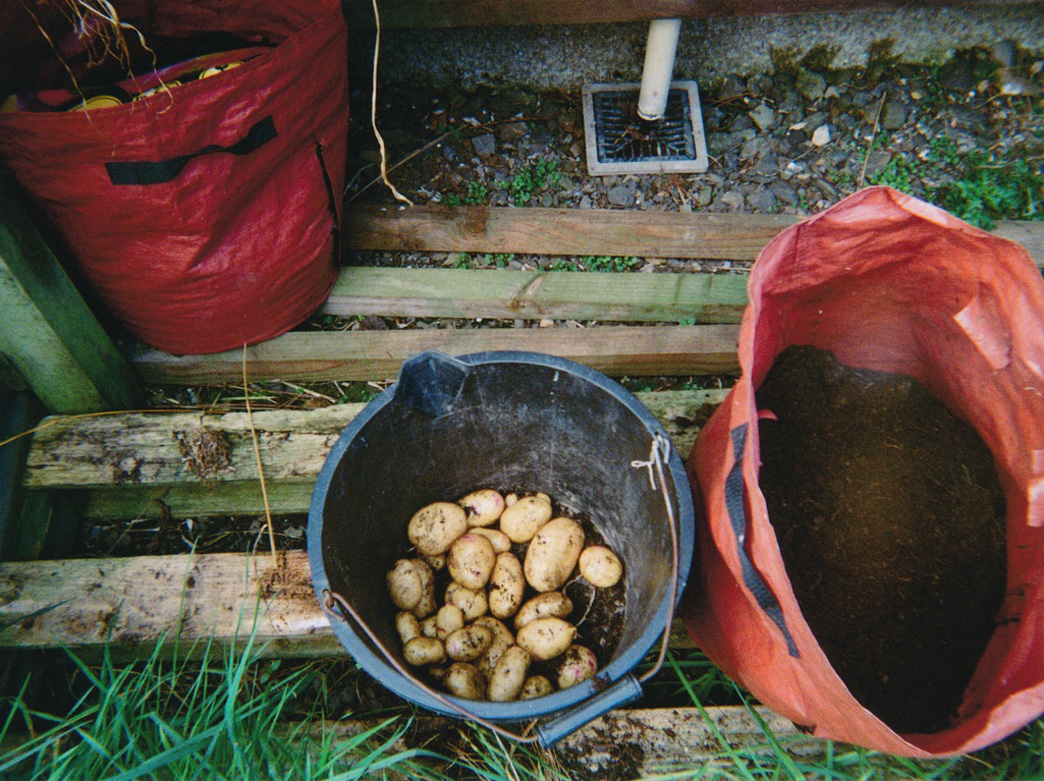
MAKING AND DOING AS A PART OF BEING, PART 3
A bag of tatties. Self-reliance - not self-sufficiency or isolationism - means kailyards with their Hungry Gap kale and tatties were a mainstay of people who value 'good hands.'

HARD AT WORK MAKING PIZZAS AT LYTH ARTS CENTRE
Good hands and self-reliance includes the arts. Lyth Arts Centre - the northernmost mainland arts centre- manages to attract both local and world famous creatives to the edge by offering hospitality and warm welcome. It was very sad to see the house that has offered - hopefully will again - so many people through its doors empty because of COVID-19. Across the parking lot, where the theatre and lounge and kitchen are, co-directors Tom and Charlotte set up a takeaway pizza business to keep people and some revenue coming through the door.

REEDS FOR THATCHING
Reeds for thatching in a patch by the side of Barrock Road. Theck is the Caithness word for thatch according to Iain Sutherland's The Caithness Dictionary. Without knowing history or botany, these might just appear to be weeds. They are much taller than other reeds. Morris said they were valued for theck.
Other invisible history bits are tied into the names of fields, farms, or former estates, which reflect the people who farmed there. Greenland, although the road sign remains, the farm town that was once there has largely vanished. Farm names such as Greenland Mains-speak to the farm towns and estates which comprised several farms. Even field names carry tributes to those who worked there.

CANISBAY SURGERY
This small building is half of the combined Castletown-Canisbay surgery. They punch above their weight to look after us, let alone visitors. And the hospitals: Wick has no pediatric unit or surgeons after hours; and Dunbar Hospital in Thurso has no A&E. There is no local police station. Even minor traffic accidents can close essential roads for hours because someone has to come up from Dingwall to investigate. Between here and Inverness there are only cottage hospitals, and local ambulances are often tied up taking patients from here to Inverness, so emergency services at all levels are already stretched thin.

THE CLETT AT BROUGH BAY AND THE EMPTY TRAILER
An old boat destined for a place of honour after refurbishment was taken on the eve of its move to Brough - no one knew who or where it had gone. There was a flurry of words on Facebook and Caithness.org and in the local paper. The next part of the story was that the boat was returned 'under police escort' and is now safely under lock and key while it gets its refurbishment. It will then be placed with historical explanation at Brough. The empty trailer is about things going missing - only some of which can be returned or replaced.

A VIEW OF THE STEPS AT BROUGH LEADING DOWN TO THE BEACH
Prior to the building of the pathway and those steps, only very hardy individuals could get over the seawall and down to the beach (and back up again). Those unassuming looking steps so easily taken for granted required thousands of volunteer hours: drafting proposal to Paths for All, getting support for the application, and then the hard graft of making the path and the steps. Maintaining or expanding existing infrastructure is hard work and very expensive. Brough is a living harbour and the last of the little harbours to still have its own committee.

THE BOTHY AT BROUGH HARBOUR
By the side of the bothy where the historical plaque and the flowers - all done by volunteers - there is a box for donations. The last time I was at Brough I saw folks enjoying it, but no one dropped a farthing in the box. They park in the lot that needs maintenance, walk down the quay or along the path and pick up rocks and shells and sing to the seals - all of which they are welcome to do, but someone has to pay for the upkeep and provide the labour to keep it there for all of us.
Participant 5 - Christine Stone
Although I was born in Upper Coll on the Isle of Lewis, today I live in Castletown where I am a supply primary school teacher and Gaelic language tutor. I love engaging with people and nature at any and every opportunity and I am deeply involved in my local community.
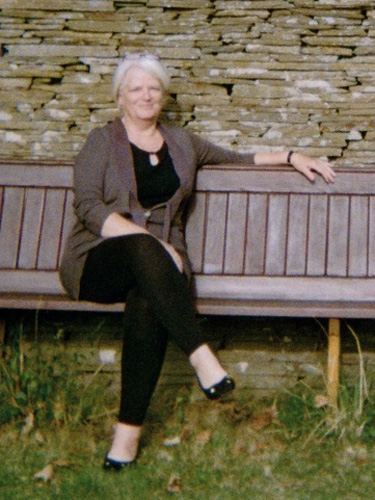
Most recently, I co-ordinated the local 'Castletown Covid-19 Support & Response Volunteers' in order to furnish needy community members with a wide range of supports: hot meals, dog-walking, pick-up and delivery of prescriptions, befriending telephone calls, shopping delivery and any other essential supports which were required.
I came to be involved in the Living Landscapes Project by attending an evening at Castlehill Heritage Centre where Julian's presentation grabbed my entire attention, imagination, sense of thrill and exploration. I was always - and am always - out and about with my camera but to engage with my own living landscape with new concepts and ideas made my excursions more vibrant and colourful as I viewed things not only from my original perspective but through another additional lens, so to speak. The entire process, from beginning to end, was a huge pleasure and particularly so during such a difficult and trying time in our lives.

WASHED UP - taken at Castlehill Harbour
In passing the harbour, the visitor may view the boats hauled up on the grass as old and no longer seaworthy. The 'Saramanda' sits there, the strong, tall wall providing shelter from the winter season until the summer weather allows her to return to the bay. There, her skipper guides her to times of plentiful fishing, to reward for toil and to generous giving. We who know this living landscape, know him and know why his boat bears this name. We know the taste of fresh mackerel from bay to plate.

STONES, SEA AND SOIL - taken at the Woodland Traill
The landscapes unite - flagstone carvings bending to rich earth. A place to rest awhile.
I feel the familiar urge to reach a slender forefinger to the top right-hand corner of each stone - a little push - and there! Perpendicular perfection!

A DYING GUILLEMONT - taken at Dunnet Bay
Black and white signifies distinction of one thing from another. This dying guillemot represents, to my mind, the reality of life and death, the loss of what is truly valued as heritage and history in the face of changing culture and circumstance. As sure as the ebb and flow, the crest and trough of the tide will change this shoreline, as sure as the sky casts cloud or sunshine on this landscape, as surely as those changes will forever seal the doom of this young guillemot, so the blacks and whites of what we hold dear will be swept away, changed or perhaps forgotten in the passage of time, unless we grasp, hold dear and keep alive what has gone before so that it remains vibrant and relevant in our current culture, life and living landscapes.

TREASURE CHEST - taken at the Shingle Beach
An exquisite show of shingle, shell and shore. Perhaps the traveller will choose the beautiful, bright oranges and yellows, or grasp the green, sea glass. We who know this living landscape see beyond. Our treasure lies there, insignificant and unnoticed by those who cannot see: a "groatie buckie", as they're called here, a peedie wee shell beloved on these shores. Plain is beautiful - and lucky, it seems. We do not look with ease; we search with determination.

MOMENTS IN TIME - taken in my garden
A conglomeration of dates. Mementos abide Julian, speaking with Christine, in October 2020. They wear masks to forever set the scene as taken in the year of the Covid-19 Pandemic. He sports a sweatshirt - a product of the 2010 Royal National Mòd in Caithness. She sports a Scotland Rugby World Tour 2007 fleece. The bench which once sat in the village Free Church found its new home in the garden in the summer of 2015. These are the changing years.

THE TARNISHED VIEW - taken at Castlehill Harbour
Gazing across Dunnet Bay to Dwarwick Pier, the scene is familiar - as if sitting with a friend of old. The comfort of seeing it is somehow marred by a stone stack which was not there before. It hurts my eyes. Each day, my original vision fades as the stone stack remains. My mind wrestles - I am unsettled and disgruntled that my landscape of years has been distorted by an unwelcome, unnatural structure. I struggle and then, one day. I act. The stone stack is no more.

LIMITED VISION - taken in the windpump tower at Castlehill
We, whose delight it is to live here, have obtained the wide lens view of our living landscapes. Looking beyond the narrow, limited view, our vision gleans a higher, wider, fuller measure as we engage and interact, with all our senses. The sights, smells, sounds, touches and tastes draw us in, providing opportunities to connect in a meaningful, sustaining way. We are those that stay and not those who simply pass by.

HERE LIES THE SELKIE - taken at the Old Cemetery, Olrig
Our living landscapes connect us to the past - our historical past and that of myths, legends and folklore. A visitor may wander through the old Olrig grave-yard, content to be in a place of quiet reflection. We know the Selkies. We know the story of these shapeshifters. They are part of us and we need not wonder or wander, for we know where the Selkie lies.

VASTNESS AND SCARCITY - taken at home
Caithness - a place of wide, open skies, painted in differing colours of seasons that come and go.
Caithness - a place scarce of trees - their beauty captured in forests and gardens. The link between our cotton-white clouds and bark and trunk - between our vast skies and hidden places connect us. We can each search for shapes, for faces and for the hidden art created within both by our living landscape. There is always more to see than meets the eye. What do you see?

SHEDDING LIGHT on our PAST - taken at Castlehill Harbour
"A pretty archway" a visitor may say. The sunshine illuminates the past, shining its freshest light on the darkness of ignorance, inviting us to step through into the warmth of knowledge - into our history - to which we are bound. The welcome light affords an opportunity to engage with our stories of old - to gain the truth that surrounds our ruins, to help rebuild our understanding of the fragments which remain where once the story was lived out from day to day.

THE PRAYER BENCH - taken at the shore, Castlehill
A place of rest for young and old from near and far, for those who find our living landscape vibrant and ever-changing, for those whose pause in this place is short - the need to move on to the next big picture propelling them forward, all too speedily. Here is a place to ponder, to speak of families, of friendships, of community, of conversations, of thankfulness, of desires and of diligence.
Here is a place where prayers are made.

MARKER STONE - taken at Sandend, Castlehill
To some, this points the way to a handy beach access. Perhaps the stone is unread or read hastily and without connection. We who stay and know, remember the person whose name is etched into the flagstone. He lives on - his story lives on although he is no longer able to walk with his guide dogs to this place, although he is no longer singing the Gaelic songs on his way home, past the lodge. This landscape connects us to him and our fond memories rise to greet us.

SOME SAY it is the BEST - Castletown FC Football Pitch
In our village, we have an impressive football pitch. Like a finely woven cloth on the loom, the cut grass patterns are in themselves a piece of art. This ground has welcomed generations who love the beautiful game. We, who observe, see the work that goes into maintaining this living landscape a work of dedication and commitment, spanning decades. A visitor may see a green space. We see a man and witness his unflinching devotion to maintaining what some say is the best pitch in the county.